Discover exceptional hospitality across 18 regions — and give back with every listing.
100% of proceeds to Philippine Red Cross
What We Offer
Send Money & Load
- Send Money — free
- Send Load — free
- Ask a Question about the Philippines
Simple, no-cost services for the community.
Business Listings
- Instant Listing — ₱99.00 ($1.99), no expiration
- Free Listing — ₱0.00, unlimited submissions
- Featured Listing — ₱999.00/year ($19.99)
Dining, Lodging, Outdoor Activities, and Nightlife categories.
Philippines Gifts
- Philippines-themed gifts available
- Every purchase supports the Philippine Red Cross
Share a piece of the Philippines with someone special.
Across Every Region
From the rolling hills of the Ilocos Region and the highlands of Cordillera, through the vast Cagayan Valley and the vibrant streets of the National Capital Region, down to the pristine shores of MIMAROPA and the fiery landscapes of Bicol — Salamat Philippines brings together listings that span all 18 regions. Whether you're drawn to Western Visayas, the Negros Island Region, Central or Eastern Visayas, or the southern reaches of Zamboanga Peninsula, Northern Mindanao, Bangsamoro, Caraga, SOCCSKSARGEN, and Davao Region, there is something here waiting to be discovered.
Featured listings have included Herbie's Catering & Events (serving since 2007, phone 0915-3545079, 59 Acapulco), ABC Hotel (phone +63 45 892 2222, Don Juico Avenue), and the BenCab Museum (phone +63 74 442 7165, Km 6 Asin Road). Browse, upvote your favorites, and sign the guest book to say Salamat.
Whispers of War: Ghost Stories and Haunted Sites of Corregidor Island
Tucked at the mouth of Manila Bay, the rocky tadpole-shaped landmass of Corregidor Island carries a weight of history that few places on earth can match. Once a strategic Spanish fortress and later the last bastion of Allied resistance in the Pacific, this island became a graveyard of empires long before the twenty-first century. The Japanese Imperial Army captured the garrison in May 1942, and among the thousands who marched into captivity were Australian soldiers from the 22nd Battalion and other units who fought side by side with American and Filipino troops. Today, their descendants and curious travellers from Brisbane, Melbourne and Perth walk the same crumbling batteries, sensing the spectral residue of those grim months.
Dark tourism has matured into a genuine cultural movement across Southeast Asia, and Australians have become some of its most enthusiastic participants. The lure is simple: places scarred by suffering carry a resonance that pristine beaches cannot offer. Corregidor satisfies that longing in spades, offering crumbling barracks, collapsing coastal guns, and a labyrinthine tunnel network where every visitor swears they hear voices that no one can quite explain. The island has earned a place on the itineraries of ghost tour operators from Sydney to Cebu, attracting backpackers, history buffs, and paranormal investigators in roughly equal measure.
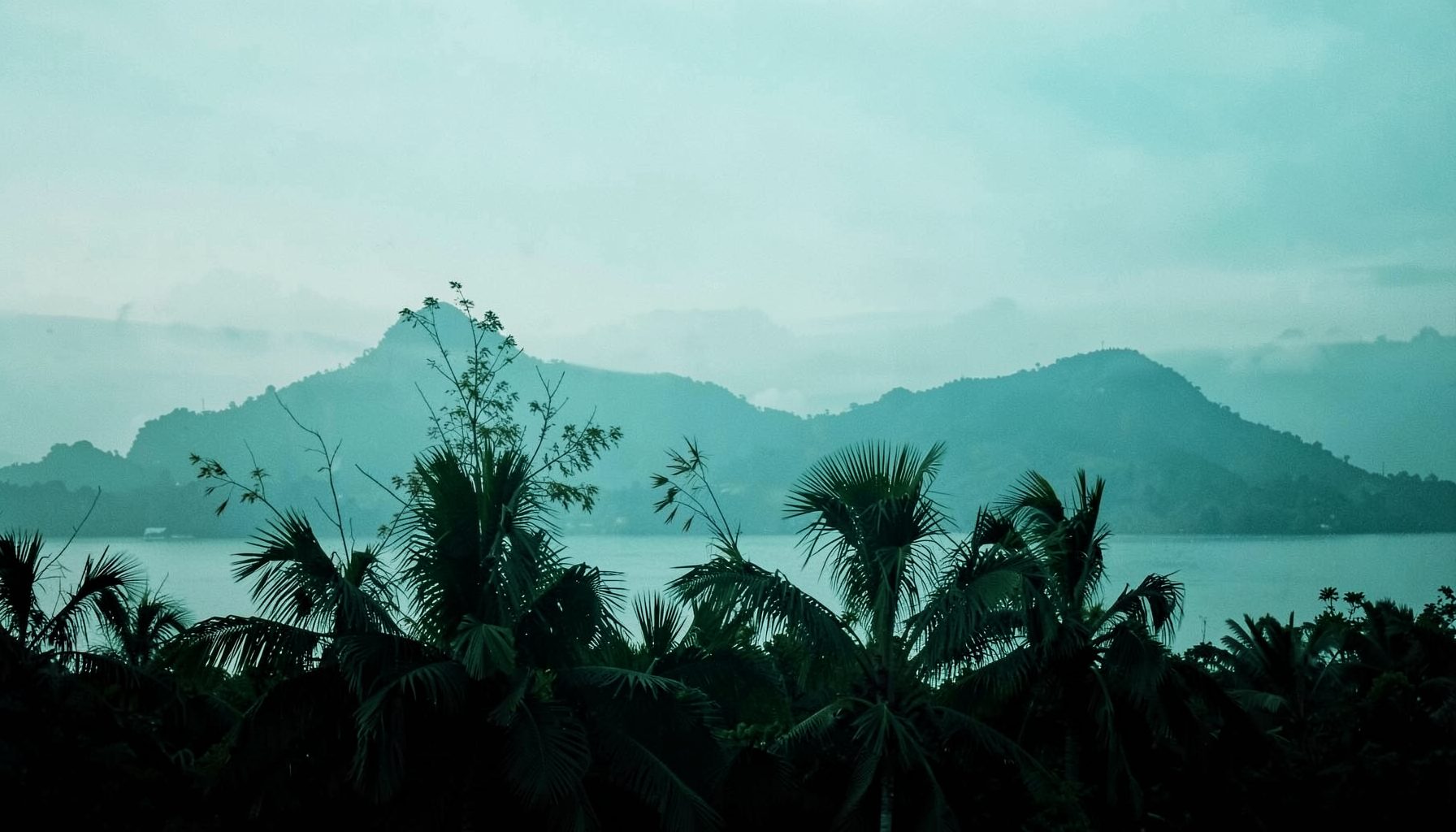
A visit to Corregidor blends tropical scenery with a melancholy that drifts through every rust-stained ruin. Coconut palms sway over silent parade grounds, monitor lizards dart through the undergrowth, and the South China Sea glitters under a sun that feels strangely indifferent to the sorrow beneath it. Travellers leave with photographs, perhaps a few souvenirs, and almost always a story they cannot quite shake. The island gives up its secrets slowly, and many of those secrets arrive after sunset.
The Wartime Echoes and Their Phantom Residences
The most pervasive legends on Corregidor revolve around the soldiers who never left. Guides who lead groups through the ruins routinely describe sightings of translucent figures in faded khaki uniforms drifting along Battery Way, the long coastal road that snakes past the island's gun emplacements. Australian visitors sometimes report an unusual sensation near the Pacific War Memorial, a sudden drop in temperature accompanied by the faint smell of cordite, even though no fireworks have been set off nearby. Whether these reports reflect genuine supernatural activity or the powerful psychology of a battlefield is a debate that fuels many a conversation over cold San Miguel beer after the tours conclude.
Beyond the human figures, witnesses speak of phantom gunfire echoing across the waters between Corregidor and the Bataan Peninsula. Local ferry operators who ply the route from Bataan to the island often share stories of passengers hearing distant artillery at dusk, a sound that chills them because the real bombardment ended more than eighty years ago. The consistency of these accounts, gathered across generations of fishermen and boatmen, gives the island's folklore a stubborn weight. Spirits, the locals insist, do not always need an invitation to linger.
Some of the most affecting accounts involve the officers' quarters near the Topside Barracks, where furniture has reportedly been found rearranged by morning, and where maintenance workers occasionally hear footsteps pacing in rhythm above empty rooms. Photographs taken on the site frequently capture orbs and blurred shapes that even sceptical visitors struggle to dismiss outright. For travellers tracing family history from Down Under, these spaces carry an additional gravity, because every unexplained sound might be the echo of a grandfather or great-uncle whose final days unfolded in this very place.
The Old Spanish Lighthouse and Its Watchful Spirits
Long before the Japanese bombardment reduced the skyline to rubble, a Spanish-era lighthouse stood watch over the southern entrance to Manila Bay. Constructed in the 1830s, the original tower was destroyed during the Pacific conflict, but a smaller rebuilt version remains operational and remains one of the most photographed landmarks on the island. Even with its modest height, the structure attracts ghost hunters who claim that the light occasionally flickers in patterns no electrical fault can explain, casting strange shadows across the cliffside at odd hours.
The keeper's cottage beside the rebuilt lighthouse holds its own unsettling reputation. Visitors touring the grounds sometimes spot a woman in nineteenth-century dress standing by the seawall, gazing out toward the horizon as though waiting for a ship that will never dock. She has been seen by guides, by Japanese tourists, and at least once by an Australian documentary crew whose footage, when reviewed, showed only the empty wall where she had stood moments earlier. The phenomenon repeats often enough that the staff no longer find it unusual, and they politely advise nervous guests to keep walking.
Folklore attributes the sighting to the wife of a long-dead lighthouse keeper who reportedly threw herself into the bay after her husband was lost at sea. Whether the story is literal truth or romantic embellishment hardly matters to the visitors who feel watched while photographing the rugged southern cliffs. The lighthouse area also offers one of the best vantage points on the island for watching the sunset paint the bay in shades of copper and violet, a moment of beauty that contrasts sharply with the haunting reputation of the surrounding stones.
Pacific War Memorial Tunnels and Unexplained Footsteps
The Pacific War Memorial complex houses a maze of tunnels carved directly into the limestone hillside, originally designed to shelter troops and serve as a command centre during the Battle of Corregidor. These tunnels, with their dim lighting and narrow side branches, form the heart of the island's paranormal lore. Visitors frequently report hearing disembodied voices speaking in English, Tagalog, and Japanese, voices that rise and fall in conversation before fading into silence. Some audiophiles have claimed to capture the sounds on recording devices, although playback usually reveals only the expected hiss of low-quality microphones.
One particular branch, known locally as the hospital annex, generates more unease than any other stretch of passage. Nurses and stretcher-bearers worked around the clock here during the siege, and the walls still bear the chalk markings used to count the wounded. Several Australian travellers with no prior knowledge of the war have independently described the same vision: a young woman in a Red Cross uniform bending over a wounded soldier, only to vanish when approached. The persistence of this particular sighting across unrelated witnesses over a span of decades gives the tunnel an almost theatrical reputation among investigators.
The most spine-tingling experience, however, often comes from the small chapel set deep within the tunnel network. Candles have been known to extinguish themselves in still air, rosaries left by visitors sometimes appear tangled in impossible knots, and the temperature inside the chapel frequently registers several degrees colder than the surrounding corridors. Guides trained by the Corregidor Foundation encourage respectful behaviour inside these spaces, a courtesy that feels entirely natural given the gravity of the place. Many Australians, especially those with military family connections, leave the tunnels in reflective silence rather than their usual garrulous humour.
The Malinta Tunnel Night Tour Experience
For travellers seeking the full immersion, the night tour of Malinta Tunnel delivers an experience few other destinations in Southeast Asia can rival. The tour begins after the last ferry departs, leaving visitors on the island with a small group and a lantern-carrying guide who knows every legend by heart. The darkness that envelops the entrance is absolute, and the echoing footsteps of the group create an atmosphere where imagination runs faster than rational thought. Phantom figures are reportedly seen more often during night tours than during daylight visits, although sceptics attribute this to the human mind filling sensory voids with familiar shapes.
Storytellers along the route share layered narratives that blend documented history with whispered folklore. They speak of American generals who held their final strategy sessions inside, of Japanese commanders who inspected the ruins after the surrender, and of the civilians caught in the crossfire whose names were never recorded in any official history. The blend of documented fact and oral tradition makes the experience feel grounded in something real, even when the stories stretch beyond empirical evidence. Visitors from Sydney and Adelaide often comment that the night tour leaves a more lasting impression than the daytime sightseeing loops.
Practical considerations matter as well. The tunnels stay uncomfortably warm and humid, and the pathways can be slippery after rainfall. Comfortable shoes, a refillable water bottle, and a willingness to surrender phones for stretches of the walk all improve the experience. Many guides ask guests to refrain from flash photography in the deepest sections, both to preserve the atmosphere and to honour the families of those who perished here. Anyone travelling from Australia will find that this single night tour justifies the cost of the entire Manila detour.
Local Legends of the Barrio San Jose
Away from the major memorials, the small Barrio San Jose settlement on the western shore offers a different flavour of haunting. This former fishing village was largely abandoned after the war, and the empty homes have been slowly reclaimed by jungle creepers and salty air. Local residents insist that the barrio's most notorious spirit is that of an old woman known simply as Lola, who knocks on doors at night and asks to be let in. Residents of nearby Caballo Island, the smaller companion landmass visible from the shore, sometimes cross at low tide to check their family plots and report seeing Lola's figure near the chapel ruins.
The chapel itself is a modest concrete structure with a crumbling bell tower that locals have learned not to climb after dark. Children growing up in the surrounding barangays are warned never to whistle near the chapel at night, a piece of folk wisdom echoed across many rural Philippine communities. Visitors who ignore the warning sometimes report being tapped on the shoulder by unseen hands, or feeling a presence that follows them along the path back to the ferry dock. The stories are told with shrugs rather than fear, because Filipinos often view such encounters as part of the everyday texture of island life.
The barrio also hosts a small museum that displays household items recovered from the ruins, including a child's wooden rocking horse that no visitor has been able to explain. Locals smile knowingly when asked about the horse and offer only the cryptic reply that it was never moved. For travellers seeking the quieter, less theatrical side of Corregidor's haunted reputation, a slow afternoon among the empty homes of Barrio San Jose offers a contemplative counterpoint to the grand memorials. Some Australian expats living in Cavite make this an annual pilgrimage, combining remembrance with a sort of personal meditation.
Planning a Paranormal Journey from Australia
Reaching Corregidor from Australia requires a short flight to Manila, usually via Singapore or Kuala Lumpur, and a connection onward to a hotel in the Bay area or directly to Bataan province. Most travellers based in Manila depart from the Esplanada Seaside Terminal in Cavite City, where ferries run several times daily during peak season. Visitors from Perth and Brisbane often combine the trip with a few days exploring Intramuros, giving the journey a satisfying historical arc from Spanish colonial Manila to the wartime ruins of the bay. Currency conversion is straightforward, with Philippine pesos available from any major bank in Manila at competitive rates.
Accommodation options range from basic island lodges to more comfortable resorts catering to history enthusiasts and birdwatchers alike. The island's only hotel sits near the main pier and offers modest but clean rooms, while day-trippers typically return to Manila by the late afternoon ferry. Anyone planning to stay overnight should reserve well in advance, especially during the October-November Undas season when Filipino families visit ancestral graves and the paranormal atmosphere reaches a seasonal peak. Travellers should also remember to update their next of kin with a current mailing address before leaving, since postal services between the island and the mainland rely on a limited ferry schedule.
Respectful behaviour is the most important preparation any visitor can make. The site functions as an active war memorial for three nations, and loud laughter or careless photography near the Pacific War Memorial is considered poor form. Travellers who treat the experience with gravity tend to leave with richer memories and more meaningful stories than those chasing cheap thrills. Australians with a personal family connection often arrive clutching letters, dog tags, or old photographs, hoping the island will offer some sense of closure. Whether or not the spirits oblige, the island itself provides something quieter and more enduring: a place where history is not merely studied but felt.
Practical Recommendations for Spooky Travel
- Book the night tour of Malinta Tunnel at least two weeks ahead during the dry season, as group sizes are tightly capped and slots fill quickly.
- Pack sturdy closed shoes rather than sandals, since tunnel floors stay damp and uneven long after rain has stopped.
- Bring a small torch with a red-light mode for preserving night vision during the lantern-lit walks through darker sections.
- Carry insect repellent and a lightweight long-sleeved layer, because mosquitoes near the ruins can be relentless after dusk.
- Allow a full day on the island rather than a rushed half-day, so the quieter haunted spots like Barrio San Jose receive proper attention.
- Travel with a local guide accredited by the Corregidor Foundation, both for richer context and for access to lesser-known tunnels.
- Bring an open mind and a quiet heart, because the most affecting encounters here rarely arrive with trumpets and fanfare.

Get in Touch
Connect with Salamat Philippines on social media or send a message. We'd love to hear from you.
Facebook: /salamatphilippines
Twitter: @salamatphil
Instagram: @salamatphilippines
YouTube: salamat-philippines
LinkedIn: company/salamat-philippines
Email: [email protected]