
Discover exceptional hospitality across 18 regions — and give back with every listing.
100% of proceeds to Philippine Red Cross
What We Offer
Send Money & Load
- Send Money — free
- Send Load — free
- Ask a Question about the Philippines
Simple, no-cost services for the community.
Business Listings
- Instant Listing — ₱99.00 ($1.99), no expiration
- Free Listing — ₱0.00, unlimited submissions
- Featured Listing — ₱999.00/year ($19.99)
Dining, Lodging, Outdoor Activities, and Nightlife categories.
Philippines Gifts
- Philippines-themed gifts available
- Every purchase supports the Philippine Red Cross
Share a piece of the Philippines with someone special.
Across Every Region
From the rolling hills of the Ilocos Region and the highlands of Cordillera, through the vast Cagayan Valley and the vibrant streets of the National Capital Region, down to the pristine shores of MIMAROPA and the fiery landscapes of Bicol — Salamat Philippines brings together listings that span all 18 regions. Whether you're drawn to Western Visayas, the Negros Island Region, Central or Eastern Visayas, or the southern reaches of Zamboanga Peninsula, Northern Mindanao, Bangsamoro, Caraga, SOCCSKSARGEN, and Davao Region, there is something here waiting to be discovered.
Featured listings have included Herbie's Catering & Events (serving since 2007, phone 0915-3545079, 59 Acapulco), ABC Hotel (phone +63 45 892 2222, Don Juico Avenue), and the BenCab Museum (phone +63 74 442 7165, Km 6 Asin Road). Browse, upvote your favorites, and sign the guest book to say Salamat.
A traveller's guide to Palawan's Subterranean River wildlife sanctuary
Tucked beneath the jungle-clad limestone peaks of the Saint Paul Mountain Range on the western coast of Palawan lies one of Southeast Asia's most extraordinary natural wonders. The Puerto Princesa Subterranean River threads eight kilometres through a labyrinth of cathedral-sized chambers before emptying into the South China Sea, earning it recognition as a UNESCO World Heritage Site and a place on the global stage of geological marvels. Australian travellers with a soft spot for dramatic landscapes will recognise echoes of the karst scenery around Katherine Gorge, yet nothing in the Northern Territory prepares you for the sheer scale of this underground waterway.
Beyond the river itself, the surrounding Palawan Subterranean River National Park safeguards more than 22,000 hectares of lowland rainforest, mangrove forest, and coastal shelf that shelters an astonishing catalogue of wildlife. Researchers have logged over 800 plant species, 165 bird species, and dozens of mammals, reptiles, and amphibians within the park's boundaries, several of them endemic to Palawan and found nowhere else on Earth. The interplay of river, jungle, and sea creates a multilayered habitat where macaques forage along the shoreline, hornbills glide above the canopy, and fish-eyed swiftlets wheel through the cave mouth by the thousand.
For Australians plotting an itinerary, the logistics are refreshingly straightforward. Philippine Airlines and Cebu Pacific operate direct services from Sydney and Melbourne to Manila, with onward connections to Puerto Princesa on the same day for under AUD 300 one-way during low season. Australian passport holders can enter the Philippines visa-free for stays up to 30 days, and the local currency trades at roughly 38 Philippine pesos per Australian dollar at the time of writing. With those practicalities settled, the focus can shift to where the jungle meets the sea.
Reaching the sanctuary from Puerto Princesa
Most journeys begin in Puerto Princesa, the relaxed capital of Palawan province and the closest gateway city with an international-grade airport. From the airport, the city centre sits only a few kilometres away, and the terminal area is flanked by the usual mix of tricycles, hotel shuttles, and Grab cars. Travellers who land late often opt for an overnight stay near Rizal Avenue, where small inns and boutique hotels cluster around bakeries and grilled-chicken eateries, before pressing north the following morning.
The drive from Puerto Princesa to Sabang, the small coastal village that serves as the gateway to the national park, takes roughly two hours along a sealed road that winds past rice paddies, hardwood plantations, and roadside stalls selling buko juice straight from the coconut. Drivers can be booked through hotels for around PHP 2,500 to 3,500 return, while a more economical option is to catch a public bus from the San Jose terminal, which departs several times a day. Those who prefer to ride pillion can also hire a habal-habal motorcycle, a Palawan staple that Australians used to zipping around Bali or Hanoi will find familiar.
Upon arrival in Sabang, visitors check in at the park's visitor centre, pay the environmental fee, and receive a schedule for the boat trip into the cave. The morning slots are quietest, and the sea breeze off Ulugan Bay keeps the queue moving briskly. From this same jetty, jungle boat tours depart into the mangrove-fringed waterways behind the beach, offering an alternative perspective on the wetlands that buffer the park from the open water.
The wildlife around the Subterranean River
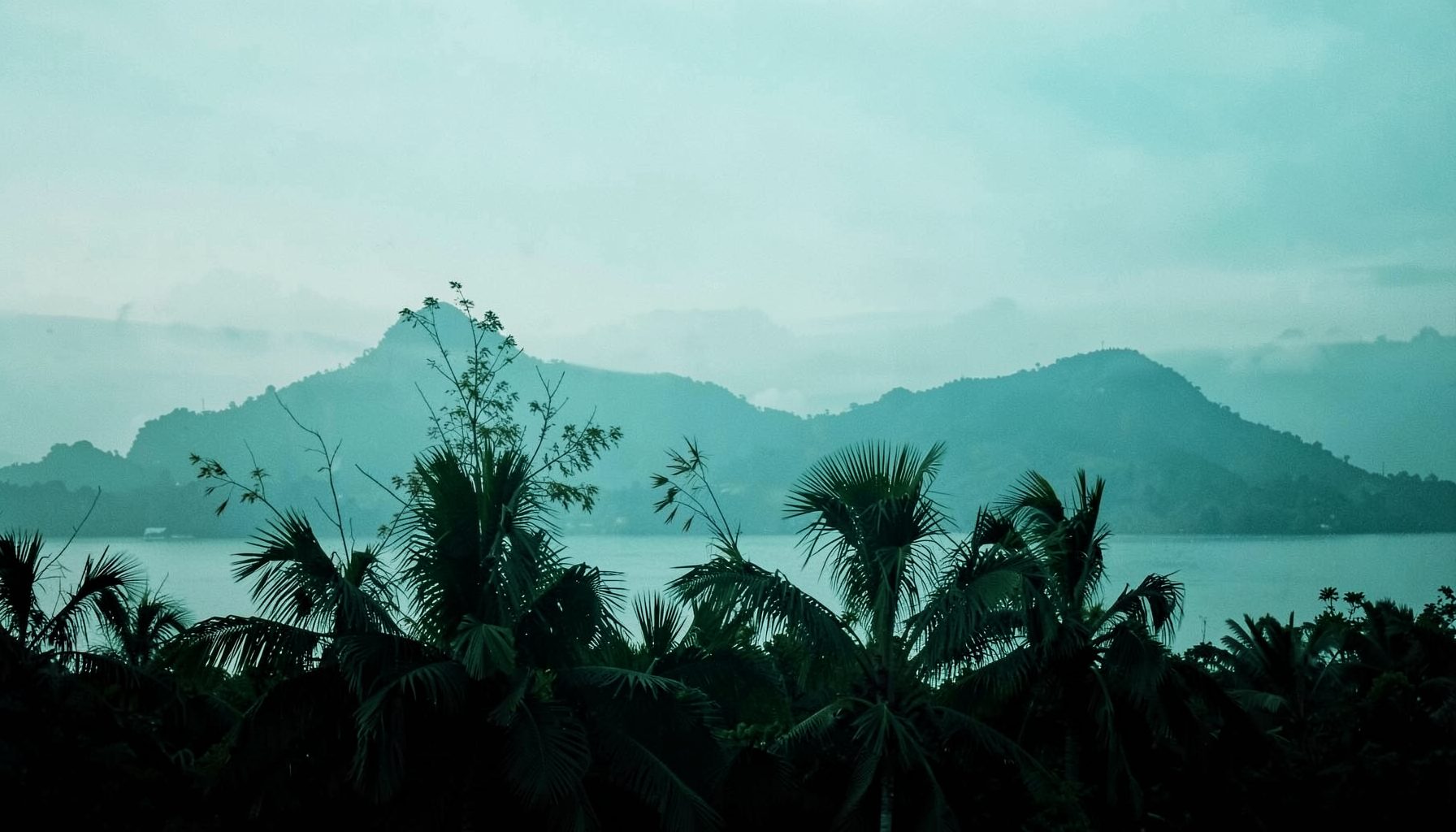
The forested hills rising behind Sabang belong to the Saint Paul Mountain Range, a block of karst and sandstone that supports one of the most intact forests remaining in the Philippines. Walking the Monkey Trail from the beach to the cave entrance is the most direct way to meet the wildlife, a 1.5-kilometre boardwalk-and-dirt path that climbs gently into lowland rainforest. Long-tailed macaques lope along the limestone bluffs, Palawan hornbills call from the crowns of strangler figs, and the occasional monitor lizard slides into the undergrowth with a flicker of forked tongue.
Birdlife is particularly rich along the canopy edges and the mangrove channels. White-breasted sea eagles patrol the bay, blue-naped parrots screech overhead in pairs, and the shy Palawan peacock pheasant hides in the denser thickets. Botanists often point out the abundance of almaciga, a resin-producing hardwood that ranks among the world's most threatened timber species, alongside wild banana relatives, rattan, and the striking botanical leaves of modern flora that pepper the trail.
Beneath the surface, the brackish water of the river supports mangrove snapper, mudskippers, and fiddler crabs along the tidal flats. As the boat motor cuts off at the cave entrance and the guides urge silence, the colony of swiftlets that nest inside becomes audible long before the eye adjusts to the dark, a wall of chittering that bounces off the limestone walls. The acoustic experience alone sets the park apart from terrestrial nature reserves such as Kakadu or the Daintree, where birdsong and water dominate but the underground dimension is absent.
Inside the Subterranean River cave system
The subterranean river flows quietly enough that the small outrigger paddles, rather than motors, propel visitors through the first kilometre of the navigable channel. Each boat carries a maximum of six passengers plus a guide, and the silence inside the cave is profound, broken only by dripping water and the occasional high-pitched squeak of bats disturbed from their roosts. The cave opens dramatically into chambers so vast that floodlights cannot reach the ceiling, and stalactites and stalagmites crowd together in formations that resemble cathedrals, organ pipes, and the giant mushroom sculptures of a children's storybook.
The most photographed chamber sits roughly 1.5 kilometres inside, a soaring space where the river widens and the limestone drapes in cascading folds. Geologists estimate that some of these formations have been growing for tens of thousands of years, fed by mineral-rich water seeping through the karst above. Guides switch off torches for a moment so visitors can experience the absolute darkness, an exercise that catches first-timers off guard and leaves a lasting impression of the cave's depth.
Beyond the main chamber, the river continues through more than seven kilometres of mapped passages, much of it accessible only to licensed speleologists carrying scientific permits. Bat colonies of several species, including the smaller insectivorous cave-dwellers that share their airspace with swiftlets, hang in clusters along the upper walls. Conservation rules cap daily visitor numbers, a measure Australian naturalists will appreciate given the access restrictions now applied to places like Uluru-Kata Tjuta and parts of the Great Barrier Reef to protect fragile environments.
When to visit and what to pack
The dry months from November to May offer the calmest seas and the brightest light filtering into the cave mouth, with February through April typically the driest window. The southwest monsoon between June and October brings heavier rain and occasional swells that cancel boat trips, though the rainforest is at its most lush and birdlife is more active. Travellers checking Australian calendars should note that Palawan's peak season aligns closely with the European summer holidays, so booking accommodation two to three months ahead is wise if travelling in December or January.
Pack lightweight long-sleeve tops and trousers for the jungle trail, as mosquitoes are active around dawn and dusk, and sturdy sandals or wet shoes handle the slippery boardwalk better than trainers. A reusable water bottle, reef-safe sunscreen, and a dry bag for the cave boat are essential, while a head torch is useful for the dim sections near the visitor centre. Australians used to the strong sun at home should bring a wide-brimmed hat and SPF 50+; even filtered light through the canopy can catch out visitors from Melbourne or Hobart who underestimate the tropical UV index.
Health-wise, no vaccinations are required beyond routine updates, although typhoid and hepatitis A jabs are sometimes suggested for longer stays. Tap water is not safe to drink, so stock up on bottled or filtered water in Puerto Princesa before heading to Sabang, where small sari-sari stores sell soft drinks and snacks at modest prices. Cash in Philippine pesos is king in the village, as card facilities are patchy and ATMs in Sabang are unreliable.
Extending your Philippine adventure
Once back in Puerto Princesa, most travellers spend at least a day exploring the city's own charms, including the Baywalk promenade, the Iwahig Penal Colony's craft workshops, and the night market where grilled seafood and halo-halo keep dinner prices low. From there, ferries and short flights open up the rest of the Visayas and northern Palawan, an archipelago of island-hopping opportunities that rivals anything Australians might find around Cairns or the Whitsundays.
Travellers looking to combine their Palawan trip with island-hopping in the central Philippines can find a useful Camotes Islands ferry guide that outlines routes from Cebu to a quieter pocket of white sand and limestone cliffs. The Camotes sit a couple of hours by ferry from Cebu City, making them a natural detour for anyone returning south via Manila, and they offer the same warm welcome and gentle pace that characterises rural Palawan.
For those with more time, El Nido's iconic lagoons and Coron's wreck-diving sites sit further north along the Palawan coast, accessible by minivan or short flight from Puerto Princesa. Combining the Subterranean River with El Nido or Coron turns a short Philippine holiday into a full coastal circuit, while still leaving room to end the trip with a Manila food crawl, a session in a traditional spa, or a quiet evening in Intramuros before flying home to Sydney or Melbourne. Few destinations pack so much natural variety into a single archipelago, and the wildlife sanctuary at the heart of the Subterranean River remains the most extraordinary place to begin.

Get in Touch
Connect with Salamat Philippines on social media or send a message. We'd love to hear from you.
Facebook: /salamatphilippines
Twitter: @salamatphil
Instagram: @salamatphilippines
YouTube: salamat-philippines
LinkedIn: company/salamat-philippines
Email: [email protected]